Quick Summary
- Klyde Warren Park in Downtown Dallas will expand by 1.7 acres, increasing its size from 5.4 acres to 7.1 acres.
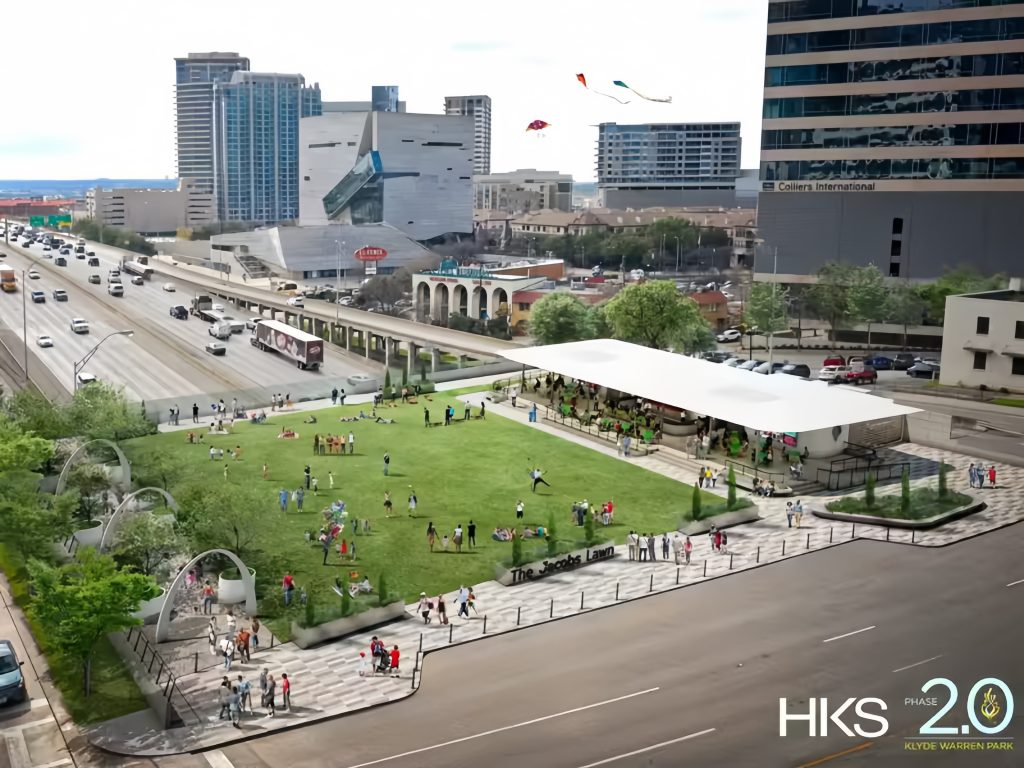
- The expansion will add The Jacobs Lawn, a 37,000-square-foot green space for festivals, markets, and community events.
- Plans also include a seasonal outdoor ice-skating rink, a two-level event pavilion, and a rooftop terrace.
- Construction is expected to begin before the end of 2026 and take approximately 24 months to complete.
- According to CultureMap Dallas, the project is designed to further strengthen Downtown Dallas as a destination for residents, visitors, businesses, and major events.
Downtown Dallas continues to evolve, and one of its most recognizable public spaces is preparing for another major transformation.
According to CultureMap Dallas, Klyde Warren Park will undergo a significant 1.7-acre expansion, growing from 5.4 acres to 7.1 acres while extending west over Woodall Rodgers Freeway. The project represents another milestone for one of Dallas’ most successful urban developments and reinforces the city’s long-term investment in creating vibrant public spaces that bring people together.
Since opening in 2012, Klyde Warren Park has become one of the most visited destinations in Dallas. The park connects Uptown, Downtown Dallas, and the Dallas Arts District, attracting residents and tourists alike with food trucks, concerts, fitness classes, family activities, cultural events, and community gatherings throughout the year.
The newly announced expansion aims to build on that success by creating additional space for entertainment, recreation, and civic events while enhancing the experience for everyone who visits Downtown Dallas.
Enjoying this content?
Join Fnu Milat’s private newsletter to receive biweekly Dallas market updates, local development news, and positive insights impacting the DFW Metroplex.
What’s Included in the Klyde Warren Park Expansion?
One of the most anticipated additions is The Jacobs Lawn, a 37,000-square-foot multi-use green space located west of Akard Street. According to the announcement, this new lawn is being designed to host a wide variety of activities, including:
- Community festivals
- Farmers markets
- Outdoor performances
- Civic celebrations
- Public gatherings
- Seasonal programming throughout the year
During the winter months, the Jacobs Lawn will transform into a seasonal outdoor ice-skating rink, introducing another family-friendly attraction to Downtown Dallas and expanding the city’s seasonal entertainment options.
The expansion also includes a new overlook area where visitors will be able to watch traffic pass beneath the park, highlighting one of Klyde Warren Park’s most unique engineering features: a deck park built over one of the busiest freeways in Texas.
Another centerpiece of the project will be a modern two-level glass-and-steel pavilion between Akard Street and St. Paul Street. Plans call for approximately 24,000 square feet of climate-controlled event and reception space, along with an additional 8,000-square-foot rooftop terrace overlooking the Dallas skyline.
These new amenities are expected to provide more opportunities for public events, private gatherings, corporate functions, nonprofit events, and community celebrations while creating an even more active urban environment in the heart of Downtown Dallas.
Construction Timeline and What’s Next
According to CultureMap Dallas, construction on the Klyde Warren Park expansion is expected to begin before the end of 2026 and take approximately 24 months to complete. Archer Western, the same firm that built the park’s original deck structure, has been awarded the construction contract by the Texas Transportation Commission.
While construction is underway, the Woodall Rodgers Park Foundation plans to continue private fundraising efforts to support the amenities, programming, and experiences that will activate the expanded park once it opens.
Although most traffic patterns surrounding the project are expected to remain unchanged, plans indicate that the dedicated U-turn at Akard Street will be removed to accommodate The Jacobs Lawn expansion.
Why This Matters for Downtown Dallas
Projects like this often have an impact that extends well beyond the park itself.
Klyde Warren Park has become one of the defining landmarks of Downtown Dallas, helping connect neighborhoods that were once separated by Woodall Rodgers Freeway. Over the years, it has become a destination for local families, professionals, tourists, community organizations, and businesses, creating activity that benefits nearby restaurants, retail, hotels, offices, and residential developments.
Expanding the park adds more than just green space. It creates additional room for festivals, markets, concerts, seasonal attractions, and community events that encourage people to spend more time in Downtown Dallas.
Large public investments and public-private partnerships like this also contribute to the long-term appeal of urban living. While many factors influence real estate values, improvements to public amenities, walkability, entertainment options, and quality-of-life features can make an area more attractive to both residents and businesses over time.
My Thoughts
I believe this expansion is another positive step for Downtown Dallas.
One of the biggest strengths of any great city is having public spaces where people naturally gather. Klyde Warren Park has already become one of Dallas’ most recognizable destinations, and adding more green space, year-round programming, and new event facilities gives residents and visitors even more reasons to experience everything Downtown Dallas has to offer.
As someone who closely follows Dallas growth, development, and real estate trends, I enjoy sharing projects like this because they help paint a bigger picture of where the city is headed. Developments that improve quality of life, encourage investment, and create stronger communities are worth paying attention to whether you’re a homeowner, buyer, investor, or simply someone who enjoys exploring Dallas.
Thinking About Buying or Selling in Dallas?
Whether you’re buying your first home, relocating, investing, or preparing to sell, staying informed about major developments across Dallas can help you make more informed real estate decisions.
As a Dallas Realtor, I help clients navigate neighborhoods throughout Dallas-Fort Worth with local market knowledge, personalized guidance, and access to opportunities that fit their goals.
If you’re a Dallas homeowner trying to navigate this 2026 market, you need a pivot strategy. Click here to access my free 2-page Seller Strategy Guide.
If you’re looking for new construction homes in DFW and across Texas, I have direct-to-builder access to real-time inventory and builder incentives, including homes that haven’t hit the MLS or public websites yet. Click here to access your personalized new construction home search portal.
If you’re interested in learning more about why Dallas continues to attract residents, businesses, and investment, you may also enjoy reading my article, “Dallas Ranked No. 8 Best City in America for 2026: What It Means for Dallas-Fort Worth Real Estate.”
FAQs
When will the Klyde Warren Park expansion begin?
According to CultureMap Dallas, construction is expected to begin before the end of 2026 and is anticipated to take approximately 24 months to complete.
What new features are coming to Klyde Warren Park?
The expansion plans include The Jacobs Lawn, a 37,000-square-foot multi-use green space, a seasonal outdoor ice-skating rink, a two-level glass-and-steel event pavilion with approximately 24,000 square feet of climate-controlled event space, an 8,000-square-foot rooftop terrace, and a new overlook above Woodall Rodgers Freeway.
How much larger will Klyde Warren Park become?
The project will expand Klyde Warren Park from 5.4 acres to 7.1 acres, adding 1.7 acres of new public space in Downtown Dallas.
Why is the Klyde Warren Park expansion important for Downtown Dallas?
The expansion will create additional space for festivals, markets, performances, community events, and seasonal attractions while continuing to strengthen Downtown Dallas as a destination for residents, visitors, and businesses. It also reflects ongoing investment in the city’s urban core through public-private partnerships.